


Show Advancing: How Successful Comedy Tours and Shows Are Built Before Load-In

Updated: 6 days ago

A show gets confirmed and before it goes on-sale, the show needs to be built. Details need to be reviewed, questions need to be answered, and logistics need to be put in place. This is where show advancing plays a very big part of the picture.
A date on a calendar is one thing. A show that is properly built, staffed, advanced, scheduled and ready for load-in is something very different.
This article walks through how show advancing works in theatres and arenas, with a focus on comedy tours. It starts with the show build before the on-sale, then moves through venue, production, labor, security, hospitality, merchandise and settlement details that need to be confirmed before load-in.
Before the on-sale, there are ticketing and show build details that need to be reviewed. After the on-sale, there are production, venue, security, hospitality, catering, merchandise, labor and settlement items that all need to be advanced. Depending on the size and type of show, some of those conversations may be simple. Others may involve dozens of people, multiple departments and a long list of follow-up items.
I’ve been asked many questions about advancing over the years, both from those already in the business and those wanting to learn. With that said, I wrote this article for managers, agents, comedians, musicians, newer and experienced tour and production managers, crew members, those working for promoters and anyone looking to better understand what happens before a show reaches load-in, as well as those looking to expand their knowledge and skill set.
What This Article Covers
Some of what we’ll cover includes:
What show advancing means and why it's so important
How the show build affects ticketing and capacity
Why the rider is the starting point, not the finish line
How the show advance process works
What goes into a venue, production, security, hospitality and merchandise advance
How labor calls and show day schedules are built
Why open items need to be tracked
How comedy tour advancing can protect settlement, revenue and the client
For anyone learning how to advance a show, the goal is not just to collect information. The goal is to confirm what is real, what's missing, what needs approval, and what needs to happen before load-in.
Before we dive right in, let’s first define what advancing is.
There are many different definitions out there, though this is my understanding of advancing as someone who learned it from some of the first-generation pioneers of the live industry.
Advancing is the process of going thru all the necessary variables before the show happens. Advancing is asking the questions, confirming the answers, identifying what is missing, and making sure the right people understand what is needed. It's also building the roadmap for how the show will be executed and making sure the necessary items that need to be handled become a reality.
If audio needs to be brought in, advancing audio is where those needs are discussed, the vendor is hired, the inventory and specifications of what is being provided are reviewed, and the plan is executed.
The same applies to lighting, video, staging, labor, security, catering, hospitality, merchandise, transportation, settlement and every other piece that helps the tour and/or show run properly.
When items need to be rented or brought in locally, the advance should also identify who is paying for those items, whether they are approved show costs, promoter costs, venue costs, reimbursable expenses, or charge backs. Those details matter because they can impact the budget, settlement, and the final economics of the show and/or tour.
There can be different types of advances.
A venue advance is going thru the variables of the building and the facilities. What is in-house? What needs to be brought in? What restrictions exist? What does the venue provide, and what needs to be rented?
A production advance is going over what's coming in, what needs to be provided locally, and what staffing and labor requirements are needed. A lot of this may be broken out in a rider, but it's important to state that what is in a rider is not always what you'll be getting on each date. That is where the advance is key. Often the venue and production advance are combined, however if a tour is only advancing with a promoter rep, the promoter rep may then advance with the venue and act in many ways as the intermediary.
One important thing to note... A rider tells people what the show may need. The advance confirms what the show is actually getting.
There can also be a catering and hospitality advance, where you are going thru dietary restrictions, meal counts, menus, coffee, soft beverages, dressing room setups, aftershow food, bus stock and timing. There can be a security advance, where you are talking thru ingress, egress, credentials, backstage access, phone policies, meet and greets, law enforcement, persons of interest and staffing as well as a whole list of other items. There can be a merchandise advance, where you are discussing whether the show is an artist sell or venue sell, the splits, the number of sellers, who retains taxes, shipping, receiving, count in/out, whether there's internet and so much more.
There are many different styles of advancing, and we are going to cover many of these items in this article.
Before the On-Sale: Ticketing and the Show Build
Before an on-sale happens, a show needs to be built, and often before an offer can even be created, scaling and numbers need to be in order. This is where preliminary conversations happen so CADs can be drawn, ticketing can build the show properly, and everyone has a better understanding of what can and cannot be sold.

If it's a comedy tour in an arena, are we looking at an end stage or a stage in-the-round? What are the dimensions and how high is the stage from the ground? Is there a barricade in front of the stage and if so, how many feet is the upright from the downstage edge? How many feet to the first row of seats? Is there anything on the floor in front of the stage that will impact the distance to the first row of seats? Are any rows made for continental seating or is there an aisle? How many seats are in each row? Are there any potential obstructions such as camera positions or cable bridges that can impact sightlines and sellable capacity? Does ticketing have all the proper information from production?

If the show is in-the-round, how wide of an aisle is needed to walk from backstage or the vom to the stage? Is there a thrust, ego ramps, cameras, cable bridges or anything else that may impact sightlines or capacity?
If the show is end stage, is there a certain amount of space needed on your upstage corners or from the back wall for clearance of production, rigging or other purposes? What is the distance from the downstage edge of the stage to FOH mix position? Are there stage wings and will they cause obstructions if sold past 180? Will they cause obstructions overall on the corners of the stage? Are there any known sightline issues that need to be discussed where additional holds are important? How many comp tickets need to be held for talent, and in any specific location or price level? Same question for venue, promoter and marketing holds.
Are there camera positions, and if so, are they on risers where there may be shadow kills?

If this is a theatre, are there production kills for sound and lights, or are they in a booth? Is the show being sold as end stage and at what sellable capacity? Is it sold at 180°, 240°, 270° or 360°? If past 180° does the tour have adequate sound coverage? Does the theatre have any extreme orchestra left and right seats that may not be able to see portions of the stage or video? Is the upper bowl or mezzanine being sold? Is the show being built as a half house show? Does the venue have soft goods to mask any sections that might not be used?
Yes, there are lots of questions above, and that’s the point.
This is exactly what goes side-by-side with advancing. Advancing is asking lots of questions and making sure the answers are conveyed to match the needs of the show coming in. Every single question above reflects in an answer that can impact the overall capacity of that show build before the on-sale happens.
I’ve always come from the school of factoring a few added holds in areas that can be relocated if you are uncertain of some of the details. It is much harder to fix the problem without having seats to work with than the alternative. If these holds are not needed as relo's they can always be released.
Ticketing should also remain part of the conversation after the initial build. As the show holds and kills seats for camera positions and FOH needs, sightline concerns may need to be reviewed again. If holds can be safely released, that can help increase revenue, but it should be done with production, ticketing, the agent, promoter and management aligned.
Two of my late mentors that helped guide me very early in my career were Patrick Stansfield and Keith Kevan. They were both individuals who I, and many others would consider maestros that helped shape what many of us know today as show advancing. Yes, like many others, we all have our styles, but the foundation all began somewhere.
I remember from over 30 years ago going to Madison Square Garden with Keith to work on the venue advance for a televised benefit show featuring Eric Clapton & friends. Keith was the promoter rep for the show.

During that time, it was common to have binders filled with your files for these shows, and when you are talking about the world's most famous arena, the venue advance had many details and individuals involved. If any part of the advance was missed or off and not handled before show day, it could be a very costly mistake.
Fast forward to recent years, while serving as production manager for a very well-known comedian, we were preparing for a few nights of shows at MSG with lots of special guests and vendors involved. My advance for that run of shows was conducted on Zoom with over 75 people in attendance and it lasted over 2 hours before going into all the follow-up that happened afterwards. The tools and technology have changed over the decades, but the need for proper planning has not. Going over what comes in first versus last, how the different departments are staffed, and how the building needs to operate is what allowed those shows to run like clockwork with little to no surprises thanks to a great advance.
Starting the Advance
So let’s go over the process. I'd like to mention that some of what you'll read is part of my personal systems and style. Many others are very successful and do things differently, so the key here isn't about one system being better than the other, or one way being the right way vs the wrong way, it's about moving forward with the process.
At some point before advancing with a venue and/or promoter rep, I’ve always been a huge fan of sending an introduction email. I’ll right away bring up all the key players on my end that will be involved in the advance process and what our needs are while setting the expectations.
When I'm looking to start the process, I'll include in the email a current copy of our rider and any plots and/or renderings we have, the security advance, catering & dressing room needs, any settlement or pre-settlement instructions, and a blank copy of our tour info sheet, which is a vital part of setting up the advance.
Ideally I always aim to advance arena and theatre shows no later than one month from show day. If it's a busy season where you have to look at bringing in production reinforcement and other local rentals or needs, you may want to give yourself more time so you don't bump into issues. More time is better.
Additionally, I'll request a copy of the current sold map with a breakout of all holds, kills, opens and solds to know how things are currently looking should anything need to be adjusted, along with a copy of the venue tech pack. I'll also request for our tour advance info sheet to be filled out in its entirety and for it to be sent back with the necessary deliverables as this all will set up the advance on our end.
Not too often, but it does happen where a site visit or walk-through may also be needed. Tech packs, CADs, photos and Zoom calls can tell you a lot, but sometimes you need to physically see the room, the dock, the backstage layout, the push from the loading area to the stage, the FOH position, the dressing room area or the route from backstage to stage to fully understand what needs to happen, especially if there are concerns that need to be addressed. It's more common to have site visits when it involves live tapings then regular shows, however if a promoter is unfamiliar with the venue and depending how things feel from the initial discussions may require a site visit to avoid surprises. I have flown out to markets when venues have been questionable to figure out necessary logistics in person.
There’s a lot here being discussed, so let's go over some definitions.
The Rider, Venue Tech Pack, Plots and Tour Advance Info Sheet
The Rider: The rider lays out what the show needs in order to be presented properly. It normally includes: technical, production, hospitality, security, labor, building access, timeline of events, merchandise, settlement and other requirements.
A rider is not just a list of requests. It is part of the agreement between the parties and is meant to protect the performance, the client, the production and the overall execution of the show. When I'm writing a rider, I make it clear that no deviations or eliminations should be made without prior approval which happens during the advance.
That said, the rider is still the starting point. Every venue is different and every date has its own variables. The advance is where the rider gets reviewed against the reality of the venue and what was agreed to in the deal sheet and offer. An important note: just because something is in a rider does not mean the promoter has agreed to pay for it. Many times people say “it’s in the rider” when the executed contract and rider may include cross-outs or revisions. This is why communication is key and advancing is everything. Those items need to be discussed, reviewed and solved before they become problems on show day. If something is a must have and a promoter is not agreeing to pay for it, discuss this with the agent. Find the solution!
A rider tells people what the show may need and/or requires. The advance confirms what the show is actually getting, what needs to be adjusted, what needs to be approved, what needs to be rented, and who is responsible for paying for it.
Plots and Renderings: Plots could include any lighting plots, which are more common in theatres to receive than arenas. If it is a theatre, often there will be a stage rendering as well that shows the amount of usable stage space, size of opening, distance from downstage edge to the upstage wall, and the size of any wing space. In arenas, if you're using the venue's stage you should be able to receive a CAD with the stage and seating. If a tour is traveling with production, they'll also have a lighting plot and stage plot most likely included with the rider. When advancing comedy shows or tours, it's also common to include cue sheets if you are not traveling with audio or lighting techs and it will be important to discuss the various cues and looks during your advance.
Tech Pack: The venue tech pack is in many ways the bible to the venue. It normally includes all the technical and non-technical information needed. Information in the tech pack can vary considerably from venue to venue, but typically you’ll find information such as power available, number of dressing rooms and/or locker rooms, number of loading docks available, staffing (guest services, security, stagehands, box office, operations, etc.), restrictions, curfews, whether it's an open venue or you're required to use in-house catering (or pay a buyout), and technical inventory in-house such as chairs, stage type, decking, barricade, audio, lights, video, etc.
I also always say you need to confirm anything and everything you may need from a venue as inventory does change often as well as individuals that were in a specific role. Just because a tech pack says they have pipe and drape or other items in-house doesn’t mean they do, or that there isn’t a charge. Verify everything during your advance.

Tour Info Sheet: A document that asks a bunch of very specific questions to be completed by the venue and/or promoter representative. Often answers are in the tech pack, however because items change often, the tour info sheet is a separate document to have completed which gets a tour organized to advance. It should be completed in its entirety as not everyone that will be looking at a completed info sheet will have tech pack access.
Items on the info sheet can include:
Venue name
Address
Physical location to stage door
Staffing names and numbers
Whether the venue is union or non-union and what the minimums are
Any curfews and, if so, what the penalties are
Number of dressing rooms
Wi-Fi information
Type of spotlights and throw distance
Midstage distance and does the venue have a midstage curtain (for comedy it's common to cut the depth)
Are there any sightline issues house left or right by hanging video midstage?
Whether there are soft goods in-house
Typically the venue advance happens with the promoter representative and/or tour production manager, and venue technical contact and other key departments from the venue. If this is a comedy tour advance, it is common for the tour manager to wear multiple hats so you may have the advance coming from this individual. Make sure to mention in your rider who will be doing the advance and provide their contact information.
From my personal experience, once I receive back the info sheet, I'll go thru all the items and know immediately whether or not we are going to need to spend a ton of time going thru a venue tech pack with questions or if most of the answers are present to make it easy to fly thru the advance.
Typically, before scheduling the advance with the venue, I’ll go over a few items quickly with the promoter rep if local rentals are involved for this date or if there are any noticeable flags or items we need to address that may need to involve the agent and/or talent buyer.
At this point, then it’s all about scheduling the advance. My style these days has me usually request to do the advance via Zoom as it makes a difference to see each individual before load-in day while going thru things. Often, I'll utilize screenshare. When it’s a new venue or someone I've never worked with before, it also makes it easy to recognize a face from the Zoom when walking in the venue.
Building a Tour Advance Info Sheet
In addition to the items mentioned earlier, here are some more items that you may want to include on your info sheet, though it's fully adjustable and you should build it to your tour and advancing needs:
City
Date of show or shows
Venue name
Address
Venue phone
Venue type
Stage size
Capacity
If theatre, orchestra pit fixed or temporary seats
Fire pocket distance and type of system
Doors
Show time
Curfew
Mandatory crew breaks
Venue production contact
Head audio name
Type of PA in-house
Head electric name
Bus parking, restrictions and power
Is there a show there the night before or after ours?
Number of spotlights
Union or non-union, crew chief name and call minimums
Who handles hospitality
Merch rate, merch contact for advance, rate for local sellers if artist sell, does the venue have tables and racks?
Box office contact
Is there laundry on-site?
Are there showers on-site?
I had a tour recently that required footlights, so I would also include that question on the info sheet and gauge what type of inventory each venue had, if any. Often, I was pleasantly surprised with inventory that was not listed in the venue’s tech pack, saving us from having to rent locally.
*A pro tip... Create the info sheet in Excel and have it sent back as an Excel file, not converted to pdf. If you have additional questions after receiving it back, it's easy to highlight and have your questions in front of you on the Excel document. This is a document I normally show on the zoom using screenshare.
I also utilize Google Docs to upload the individual info sheets to an existing workbook that is visible to some members of my touring party. Creating systems that work for everyone’s workflow during the advance process matters. When advancing dozens of shows, I like to color code the tabs with info sheets for each market so I know which info sheets I’ve received back, which ones I haven’t and which shows I’ve completed the advance on.
Scheduling the Advance
So now that you have the info sheets back and completed with a chance to review them along with the venue tech pack, it’s time to schedule your advance.
The truth is there is no single right way to advance the show. Some do it solely by email with limited to no calls, some do it on the phone, and others like myself always aim to do it on Zoom or Microsoft Teams. What matters is that the information is conveyed on what’s needed, it's confirmed, and questions are getting answered.
Remote advancing has also become a real option for certain comedy tours that may not be traveling with a full-time PM or TM. It isn't the same as having someone on-site each day, but if handled properly, a remote advance can still help organize the venue, promoter, production, security, hospitality, settlement and ticketing details before anyone arrives on show day into the venue.
I’ve had festivals in the past where the touring festival PM would literally send over a checklist of all the items they needed with times and labor. As long as they received all items from that list, the infrastructure of the tour provided everything else needed for that festival to run.
It’s also not uncommon to see managers of comedians or smaller acts send out an email questionnaire that lays out their needs where they may have an office assistant compiling responses. I’ve many times as a promoter representative filled out these forms and sent them back, while having to then advance directly with the venue without any touring personnel oversight. We’re relying on all the information that was sent over to be accurate.
I cannot say that I’m a fan of this last model, but sometimes it’s the system that’s in place when there isn't someone directly overseeing production. It can work, but it relies heavily on every answer being accurate and every detail being understood.
The Show Advance Call: Email, Phone, Zoom or Teams
So let’s now talk about the advance.
We sent the intro email, received the info sheet back filled out, reviewed the venue’s tech pack, took our own internal notes of items to go over on the advance and now we schedule it.
How I like to conduct my advance is on Zoom and at first to have everyone that’s part of the advance introduce themselves. If I have a show that involves a great deal of rigging, I’ll include my head rigger. If I’m doing a show in-the-round that has a great deal of audio and possible reinforcement needs outside of what we’re traveling with, I’ll include my head audio. If there’s video needs and we’re looking to tie into the house system or may have a handful of local rental needs, I’ll include my head video. And lastly, if I have limited or no tour personnel on the road, it may only be me going thru all the necessary elements.
Even if a venue has production in-house, the question comes to whether or not it's adequate and will suffice the needs of your client.
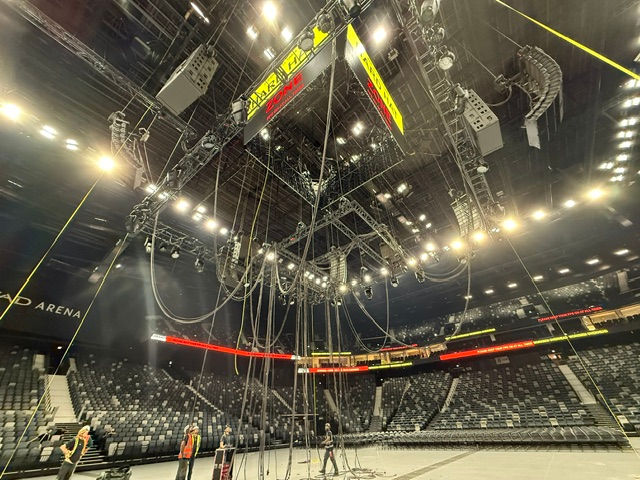
While production managing one of the biggest comedians in the world, his show was in-the-round and it was common to have to start a pre-rig as early as 5am domestically in order to have production built properly and overseas with some concerns as early as 2am based on the local labor and rentals being provided.
Following introductions, I think this is where you moderate and lead the advance in the format that works best for you.

I’ll usually ask about venue access, docks and parking to start, as often a tour will be coming into a venue in the wee hours where drivers & tour crew may need to use the restroom facilities. It'll be important to know where the trucks and buses park. Is there shore power? Can buses stay overnight? Can trucks pull in the docks upon arrival and if not what time? Do we have access to all docks? Are any permits needed? Travel and movement logistics can also become part of the advance. These details matter because the show day doesn't start when the crew walks inside. It often starts when the first bus or truck arrives. If a venue has 24 hour security, having a phone number of security for the drivers upon arrival can be extremely helpful. Venues need to be aware of long drives where a driver may not be able to move their vehicle for several hours after parking, so the goal is to get it right the first time.
Labor Calls and Building the Schedule
From seeing on the info sheet what labor is being provided and whether the venue is departmentalized or not will help on scheduling your labor call.
Often in my clients' riders, I’ll have a tentative labor call both non-departmentalized as well as departmentalized with rough times. The local labor rules and hourly minimums will often help determine when load-in begins. If it's a union house, the collective bargaining agreement (CBA) will spell this out.
I often work the times back starting at the anticipated end time of the show and leading to load-in to factor any walkaway meals if we’re going dark, meals on-site, and to make sure we don’t miss a vital time based on the hourly minimums and labor agreement which could result in meal penalties or paying additional overtime.
Let me break this out in an example that may be easier to interpret:
The comedy show is 110 minutes from start to finish with openers and a ticketed start time of 8pm. This union house requires show call to start 1 hour before ticketed time (note: it's also common to see 30 minutes before). What this tells me is we'll either need to feed the hands onsite from 6:00pm to 6:30pm or 6:30pm to 7pm or go dark from 6pm to 7pm. We may need some time to soundcheck the comic either before or after the stagehands go to meal. Call back for hands coming back for load out will most likely be 9:30pm however the question comes as to whether there's normally any hold of starting the show on time.
If holding doors for 5 to 10 minutes isn’t possible, it could result then in going dark 5:30pm to 6:30pm. Working back 4 or 5 hours from that time would give me lunch either fed from 12pm to 12:30pm, if 5:30pm is 5 hours later, or possibly doing a 12:30pm to 1:30pm walkaway, which then sets the next meal 4 hours later. If the comedy tour isn't traveling with production, instead of a lunch, I'm looking most likely at a 1 or 2pm load-in based on earlier times. If I'm traveling with production, I'm most likely here looking at an 8am load-in and/or 7am if requiring an hour for rigging. The size of production will dictate the call, and talking thru it with whoever is dispatching labor should help you get your times and numbers aligned.
There are a few different ways this schedule can be set and in all honesty, it’s just best to go thru it with the venue as they'll bring up any concerns as well.
Production Advance
Now we'll discuss in greater detail the variables required for advancing production.
Every show is different and as much as comedy touring and comedy shows may not have all the same needs as music touring and shows, it isn’t uncommon today to have a comedy and/or podcast tour that has heavy production needs. It's becoming more and more of the norm. Production will cover during the advance: stage specifics, audio, lighting, video, spotlights, barricades or no barricades, FOH, dressing room needs, runners and rentals.
A past client of mine had heavy dressing room needs, so I used to send venues a document with a breakdown of furniture needs on a grid broken out by their backstage layout to see if they had the inventory in-house or if anything needed to be rented.

Let’s also not forget that while talking production, ticketing becomes another key variable during the advance. Are there camera holds, FOH holds or sightline issues that need to be discussed? Did these items get discussed before the on-sale or not? I often require someone from ticketing to be part of the advance so we can go over any and all holds during an advance, especially if I’m planning to release holds or if we need to go over relos.
If vendors or additional tour personnel need to be hired locally, the advance is also where you confirm who is sourcing those vendors, who is approving them, what they are providing, when they arrive, how they are being paid, and whether those costs are part of the deal as a show cost, a promoter cost or a charge back.
A huge part of advancing is asking lots of questions that you need answers to. Some examples of questions that may come up:
What type of stage is in-house?
If it’s not a fixed stage, does the stage roll?
What is the throw from our camera position(s) to the stage?
If you’re providing cameras, what type of lens do you have for your camera and will it cover the type of shots we’re after? Where is video control?
What’s the distance from low/high steel to the floor for rigging, and what are the weight limits? Do we need pullers in the air as well, and will there be a need for multiple bridals? If rigging around a scoreboard, do we need spanners?
Do you have pipe and drape in-house?
Is there any projection, screen(s) or LED wall(s) in-house for IMAG?
Do you have barstools in-house that are non-padded, black and backless?
What type of com do you have in-house? Is it Clear-Com or RTS?
Is it wired or wireless?
Do you have LED lighting or movers as part of your theatre lighting package, and if so, what type? Are your lights conventional?
Who controls house lights?
Do you have lights available for a floor package?
Do you have wired and/or wireless microphones and what types?
Do you have forklifts in-house and blade extensions?
Do you have soft goods to split the depth of the stage?
Do you need flame certs for our tour soft goods?
Will we be seeing a fire inspector onsite at any point?
How much storage space do we have backstage and in the hallways?
Not all shows are treated equal when it comes to production. It’s just as common to have tours where most of what they need is already in-house with minimal to no rentals. In these instances, it still is vital to make sure there are no surprises and to go over any and all needs. If you’re not traveling with your own head audio and lighting designer, you’ll need to advance that you need these positions to be provided by the venue and/or promoter. If your show is in a theatre or club and many of the questions above feel like they don't apply to you, there are plenty of other advance questions needing clarification that can be asked.
Whether you are carrying production or relying on the house, the advance is where you confirm if the available resources match the needs of the show.
Security Advance
Security is another very big piece of the advance process.
What is ingress and/or egress for the venue? How many lines of entry? What is the venue search procedure? How many security are working the show? Are there ushers as well, and if so, how many? What is the policy for weapons? Does the venue allow individuals to carry in-house? What about off-duty officers? Is there a firewatch? If there's more than one show that evening, how does the room get flipped and what does that timeline look like for the venue and security?
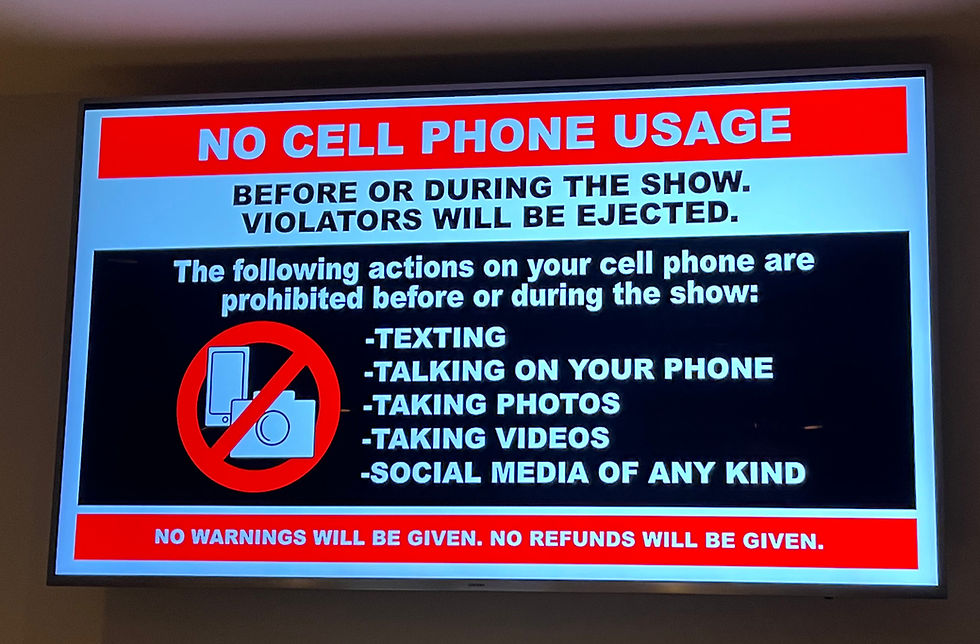
For comedy tours, it’s common to have strict policies about no cell phone usage as well as no audio, no video and no photography during these shows. In some instances, a tour may require Yondr, which is a company that locks phones in pouches upon entering the venue where they’ll have cell phone use zones designated where patrons can go to have their phone unlocked while using their phone in that location.
For comedy, it's also worth discussing how the no-photo, no-video or no-phone policy is being communicated to the audience. Is there signage? Is there an e-blast from ticketing? Are there pre-show announcements?
The security advance will also go into detail on covering persons of interest, stalkers and/or individuals to be on the lookout for (ie: BOLOs) if it applies. They’ll also cover what to anticipate from your client. Does the comic performing call individuals on-stage or go out into the audience during the show? Do they sign autographs after the show? Is there any pre or post meet and greets, and what are the staffing requirements?
If there are any VIP, pre-show or post-show activities, those should also be discussed during the advance. Where are they happening? Who is managing the line? Who has access and what is the anticipated number of guests? Is security needed? Does the venue need to provide stanchions, tables, signage or a dedicated room? These details can affect staffing, timing, credentials, runner needs and the overall backstage flow.
It’ll be good to ask venues to walk you thru during the security advance the deployment of staff as it's very common during an advance to increase or decrease numbers based on ticket sales and tour needs while going over positions. Does your show also require roamers from security?
Affiliate Ad

Another good thing to bring up during the security advance is whether there will be a law enforcement presence on-site and if so, where they are located. If there are handouts before or after the show given to patrons, this will get discussed during the security advance as well as a time to have a security meeting on-site.
If a tour is traveling with credentials, discuss the various types of credentials and who is issuing them along with copies of the security board chart. Some venues will ask for a crew list for load-in to know all the names up front of those entering the facility, regardless of whether they have a credential on or not.

Be prepared to have a security meeting day of show and to schedule it in advance so it works with the tour schedule. When I'm conducting the security meeting day of show, I'll typically aim to have it when the stagehands are at meal, as it's a great time to get everyone that leads security, event services and house crew together in front of the stage.
Personally for the shows and tours I'm working on, I always ask venues to provide a house radio or if they don't have one available, I'll provide a radio to them and the promoter rep so there’s communication available throughout the day for security. If buses are arriving overnight, will security be on-site to park the buses?
These are the types of details that may not seem connected to production at first, but they absolutely impact how the day operates.
Catering and Hospitality Advance
Part of the rider typically covers hospitality and catering. I've seen days go south very fast because of catering issues, and I make it a point to include in riders how essential and important catering is for the day.
On smaller shows, it may be very minimum and a few items that might get picked up by the venue or promoter. As the shows grow into larger theatres and/or arenas or stadiums, the needs change as the size of the touring party typically increases.
This could include the need for meal counts, dietary restrictions, timing of meals, timing of dressing room setup, coffee, tea and water setup for stagehands, aftershow food, buyouts, if stage coolers are needed and bus stock.
While advancing, the question should come up whether a venue is exclusive with catering or hospitality or if the runner is able to pre-shop and pick up dressing room items.
Often if doing a theatre tour, it is the runner doing a pre-shop on the individual dates and it’ll be important to go over timing with the promoter rep in making sure the runner receives proper cash float with adequate time to do the pre-shop if they aren’t going to pay upfront and be reimbursed.
The timing is also essential as you may need to start the runner a few hours before load-in begins if they have to prep a coffee setup for the stagehands, while doing a pre-shop and having time available to do regular show runs. It's common on theatre comedy tours for the runner to go out and pick up lunch for the touring party working at the venue at lunch time. If there is no catering on-site providing meals, the runner may also need to get a few local menus of restaurants based on the tour's requirements. If they have other shopping needs that are incomplete, this could impact the overall schedule.
Timing is vital here.
Sometimes for shows in theatres, you may want someone dedicated on dressing rooms and hospitality while having a separate runner for all other items to avoid cross-over. Depending how large or small your hospitality rider is may dictate this.
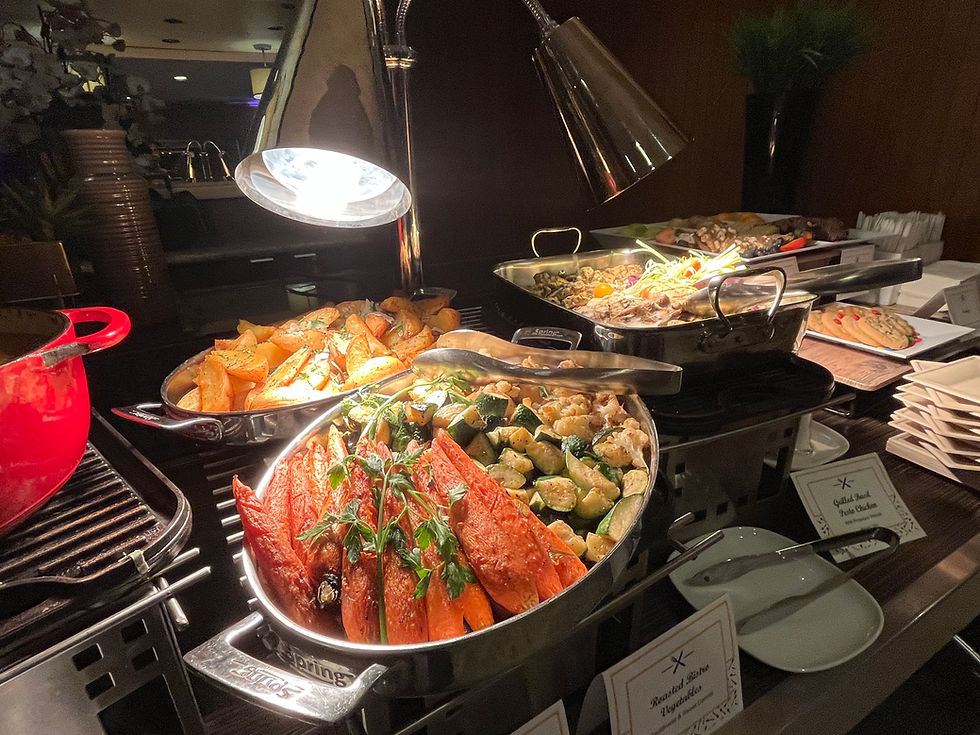
If you are doing on-site catering, part of your advance must be aligned with production on timing of meals and meal counts. Your meal counts may include tour personnel, talent, venue personnel, promoter personnel, stagehands and possible additional meals depending on your needs. Also, you'll want to discuss whether all laminates are allowed to eat in catering and/or if meal tickets are being utilized. If you are using meal tickets, make sure to discuss also who's going to be providing them.
Hospitality and catering sound simple until they are not. The advance is where the timing, responsibility and execution need to be figured out.
Pre-Settlement, Show Settlement and Expenses
Another important piece of the advance is going over any pre-settlement, show settlement and expense items during the advance. If estimates are needed, this should be addressed at this time.

If the venue charges for any production, you’ll want to know what those costs are. If a show is selling strong, you may want to request a pre-settlement to go over all venue costs and promoter costs a week in advance to avoid any surprises at the venue night of.
I’ve commonly requested pre-settlements be sent to me no later than a week before a show where I’ve identified errors based on estimates following an advance, where staffing numbers or other costs had to be adjusted. I’ve also commonly noticed things that have been missed by not seeing costs associated for items that were requested.
If there are any cash needs to be received before load-in or throughout the day of your show, this usually comes up during the advance when talking about settlement and going thru any instructions that are provided.
A good advance can protect settlement. If local rentals, labor, security, catering, runner cash, reimbursable expenses, promoter costs or venue charges are being discussed during the advance, those items should not be a surprise at settlement.
Merchandise Advance
Another advance that is worth discussing is merchandise.
By including on your info sheet a space for the venue merch contact, it will save time by allowing whoever is managing merch for the tour to connect with the proper individual with the venue to advance.
Key questions that come up during that advance:
Is it a venue sell or artist sell?
What are the percentages of soft goods versus hard goods?
If it is artist sell and I need more staff, do you have a labor pool and what are the rates?
What do the merch locations look like and what is provided?
How many locations for merch sales are being provided?
What is the venue policy on receiving a drop shipment in advance and shipping out following our departure?
What time does your staff arrive to do count in?
Who retains tax?
If sales are going thru venue POS, what are your credit card transaction and processing fees?
Is there internet available at all merch locations?
Merchandise is one of those areas that can feel separate from the production advance, but it is still part of the overall show operation and impacts your talent’s bottom line. If the merchandise setup, staff, tax, shipping, internet and settlement details are not discussed during the advance or in a separate merch advance, they can become problems on show day.
After the Advance Call: Open Items and the Show Day Schedule
So now that we completed the advance, it’s important to recap what has been discussed.
The advance is not the finish line. It’s where the open items become visible.
As mentioned earlier, the advance may adjust what’s needed and not needed, so a rider isn’t always the be-all. Depending on the venue and ticket sales, I’ve often trimmed or removed items that carried additional costs.
How you convey the necessary information to your team after an advance may vary. There are programs out there like Master Tour and Day Sheets which make it easier to get the proper information to those part of the organization. Personally, I’m a huge fan of Master Tour as it updates in real time and has a mobile app, which makes it convenient for everyone part of the team to have access to the schedule, attachments you upload, venue, travel and hotel information available.
After the advance, recap open items, confirm any changes to labor, security, hospitality, rentals, ticket holds, settlement or local costs, and make sure the right people know what changed.
If something is still unanswered, it needs to stay visible until it is answered. That could be a rental quote, a labor revision, a tech question, a security deployment, a cash need, a runner schedule, or something ticketing related.

Creating a checklist for each show date that goes over any open items is beneficial. As much as seeing binders these days is not as common as it used to be, I still often have binders with tabs for each show date. One page for each show includes an advance checklist of items that are complete and/or still outstanding.
This could include rental quotes, labor adjustments, security staffing, catering notes, settlement items, ticketing holds, runner needs, credential questions or anything else that still needs to be answered. Whether you use a binder, a spreadsheet, shared google drive, Master Tour or another system, the important part is making sure open items do not get lost.
Whether it is called a tour advance checklist, show advance checklist, spreadsheet, binder or something else that works for your system, the purpose is the same: keep every unresolved item visible until it's handled.
The advance also feeds directly into the show day schedule. Master Tour and/or Day Sheets can help you build a schedule for each day, and it’s common to find that schedule in dressing rooms, production offices and other backstage areas.
If you are not a fan of the formats or templates available, you can always build one yourself. What matters is that the right information is clearly communicated. Load-in, meal times, soundcheck, doors, show time, runner calls, security meetings, meet and greet, curfew and load-out all need to be easy to find and understood by the people who need that information.
I know a tour manager who creates a private Instagram account where only individuals on his current tour have access. Daily schedules are posted there along with tour-related photos such as POIs, stage door locations, venue access points, daily wifi information and other useful details for the team. While I don't personally use that technique, I think it's a great example of building a system that works for your tour.
This is where organization matters. The initial advance may be over, but advancing that show continues until the open items are closed and the show day information has been properly communicated.
Common Production Advancing Mistakes
Some of the most common mistakes in advancing come from assuming something has been handled just because it was sent over or written down somewhere.
A few examples:
Assuming the rider was accepted as written
Assuming the tech pack is current
Not confirming who pays for rentals
Not involving ticketing when holds or kills may change
Not reviewing labor minimums before building the schedule
Not confirming who is providing the sound engineer or LD for the show if you aren't traveling with one
Not going over security deployment and staffing numbers before show day
Not reviewing hospitality timing with production timing
Not looking at menus created by catering when dietary restrictions are of high importance
Not recapping open items after the advance
Not making sure the right people know what changed.
Not communicating
Most of these mistakes are avoidable. That is the point of the advance.
Final Thoughts
Advancing is not just paperwork and it is not just sending a rider.
It is the process of taking a confirmed show and building the roadmap for how it will actually happen. It is where assumptions get replaced with answers. It is where missing items are identified. It is where costs are discussed. It is where staffing, timing, production, security, hospitality, merchandise and settlement all start to connect.
A show that is properly advanced gives everyone a better chance of walking into the venue prepared. The venue knows whats coming. The promoter understands the needs. The crew has a plan. The client is protected. The show has a better chance of running smoothly.
The best advances are rarely noticed by the audience, and that is usually the point. When the work is done properly, the day moves cleaner, the problems are fewer, and many of the issues that could have happened were handled long before load-in.
The ultimate goal is simple: protect the client and key stakeholders, support the team, and give everyone involved the best possible chance to walk into show day prepared, confident and aligned.
For questions about comedy tour advancing, production advancing, or upcoming tour and show needs, Platinum Road is available to discuss how those details can be approached.
Frequently Asked Questions About Show Advancing
What is show advancing?
Show advancing is the process of reviewing and confirming the details needed for a show before it happens. This can include production, venue access, labor, security, hospitality, merchandise, ticketing, settlement, travel movements and other show-related details. A tour normally advances many show dates simultaneously.
What is the difference between a rider and an advance?
A rider lays out what the show may need in order to be presented properly. The advance confirms what the show is actually getting, what needs to be adjusted, what needs to be approved, what needs to be rented, and who is responsible for paying for it.
Why does advancing matter before a show goes on-sale?
Advancing before the on-sale matters because the show build can impact capacity, sightlines, holds, kills, FOH, camera positions, production needs and ticketing. If those details are not reviewed early, problems may be harder to fix once tickets are already sold.
What is included in a production advance?
A production advance can include stage, audio, lighting, video, rigging, spotlights, barricade, FOH, dressing rooms, runners, local rentals, labor calls, department heads, vendor needs and any other production-related items needed for the show.
How does advancing protect settlement?
Advancing can protect settlement by identifying costs before show day. Local rentals, labor, security, catering, runner cash, reimbursable expenses, promoter costs, venue charges and charge backs should be discussed during the advance so they do not become surprises at settlement.


Comments